
Beginner Vegetable Fermentation: What You Need (and What You Don’t)
October 9, 2026
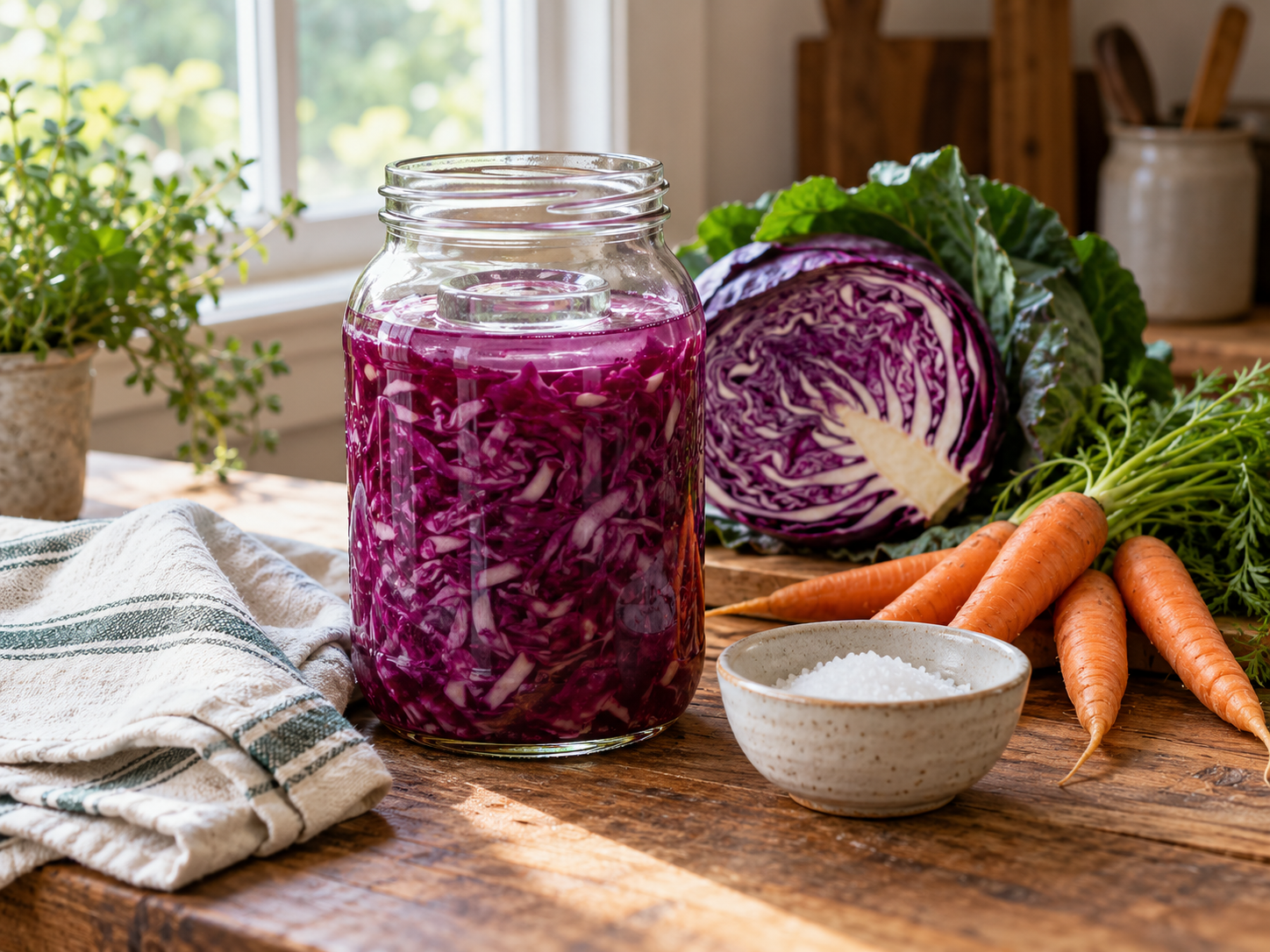
Vegetable fermentation can be a useful way to work with a garden harvest, but it is not the same process as canning. Fermentation relies on beneficial bacteria producing acid over time. Canning uses a tested heat process to make certain foods shelf-stable. A fermented jar that has not been processed with an approved canning method still needs the storage steps in its tested recipe.
For a first batch, start with one research-based recipe rather than an open-ended “use whatever is on hand” formula. The National Center for Home Food Preservation publishes tested directions for sauerkraut and fermented pickles. Your local Extension service can help you adapt your workspace and answer food-safety questions without changing the recipe’s required proportions.
The short list: what you actually need
A research-based recipe for the exact food you plan to ferment.
Fresh produce in the quantity the recipe specifies.
Canning or pickling salt, measured exactly as directed.
A clean, food-grade fermentation container that fits the batch.
A way to keep the vegetables below the brine.
A cover or airlock appropriate to the container and recipe.
A place where you can monitor temperature and the ferment regularly.
1. Begin with the recipe, not the gadget
The equipment only helps you follow a safe process. It cannot correct an untested salt ratio, unsuitable temperature, or vegetables floating above the brine. Choose the recipe first, read it all the way through, and note the container size, salt amount, temperature range, fermentation time, and final storage instructions.
For example, the National Center’s sauerkraut directions use firm cabbage, a specific amount of canning or pickling salt, and a temperature-dependent fermentation period. The same recipe also explains how to cover and weight the cabbage. Those details work together; do not borrow one step from a different recipe and assume the result is equivalent.
2. Match the container to the batch
Food-grade glass and plastic containers are suitable options, and a crock can work when it is made for food use and has no cracks. The National Center notes that Mason jars can be used for small batches, though keeping vegetables submerged can be harder and spoilage losses may be greater. If you use a jar, leave the space your recipe requires and use a compatible system that manages gas without letting the vegetables rise above the brine.
A wide-mouth jar can be easier to pack, inspect, and clean than a narrow opening. Before buying an accessory kit, confirm the jar-mouth size, what the kit actually includes, and whether jars are included. A lid or weight described as “wide-mouth” will not fit every jar.
3. Keep the vegetables under the brine
Submersion is one of the jobs that fermentation equipment can make easier. The National Center advises keeping cabbage and cucumbers one to two inches under the brine. A properly sized glass weight or other recipe-approved setup can help hold the vegetables down. Check the jar during fermentation as the recipe directs rather than assuming a lid makes the process maintenance-free.
Clean the container and equipment before starting. Discard a batch when the trusted recipe or Extension guidance tells you it shows spoilage; do not taste questionable food to decide whether it is safe.
4. Use the specified salt and temperature
Salt is not just seasoning in fermented pickles and sauerkraut. It helps favor the desired fermentation and should not be reduced or replaced unless the research-based recipe specifically allows it. Canning or pickling salt is the simplest choice because it measures predictably and avoids additives that can cloud brine.
Temperature changes how quickly fermentation proceeds. The National Center’s sauerkraut guidance recommends 70–75°F for about three to four weeks, while cooler conditions take longer and temperatures above that range can soften the kraut. Follow the temperature and time for your exact recipe rather than treating those figures as a universal schedule.
What you probably do not need for a first batch
A large crock when you are testing one small recipe.
Multiple lid systems before you know which jar size and routine you prefer.
Decorative labels before the process and storage plan are settled.
A pressure canner just to make a refrigerated fermented vegetable.
A gadget that claims to replace a tested recipe or regular monitoring.
Start with the few pieces that solve real jobs: a compatible container, reliable submersion, a suitable cover, and the measuring tools your recipe calls for. You can add equipment after one completed batch shows you what is genuinely inconvenient.
A practical accessory to compare
Affiliate disclosure: The product link below is an Amazon affiliate link. If you buy through it, Practical Homestead Picks may earn a commission at no extra cost to you. This is a research-based suggestion, not a hands-on test.
Masontops’ current product page lists four silicone Pickle Pipe airlocks, four glass Pickle Pebble weights, one acacia Pickle Packer, and a recipe book. Jars and screw bands are separate. Confirm the linked Amazon listing is the wide-mouth version, current seller, package contents, price, and availability before buying. The kit does not replace a tested recipe, correct salt measurement, temperature control, or monitoring.
Check the Masontops kit on Amazon
A safe first-batch plan
Choose one tested sauerkraut or fermented-pickle recipe.
Confirm the batch size, container volume, and exact salt before shopping.
Clean and inspect the container, lid or cover, and weight.
Prepare the produce and brine exactly as directed.
Keep the vegetables submerged and monitor the batch as the recipe requires.
Follow the tested end-point and storage directions; fermentation alone is not permission to store a jar at room temperature.
Keep the next step practical
Compare more kitchen and preservation tools, review our affiliate disclosure, or get the next seasonal guide through the Practical Homestead Picks newsletter.
Sources and further reading
Masontops: Complete Mason Jar Fermentation Kit product information
National Center for Home Food Preservation: Sauerkraut
National Center for Home Food Preservation: Suitable containers, covers and weights
National Center for Home Food Preservation: Salts used in pickling
University of Minnesota Extension: Preserving food at home—fermentation
Bottom line: one tested recipe and a simple, compatible setup are enough to learn the process. Buy the accessory that solves a specific problem, not a shelf full of equipment before the first jar is packed.