
Fall Garden Tool Care: A Simple Cleanup and Storage Checklist
October 7, 2026
Download the free tool-care checklist (PDF)
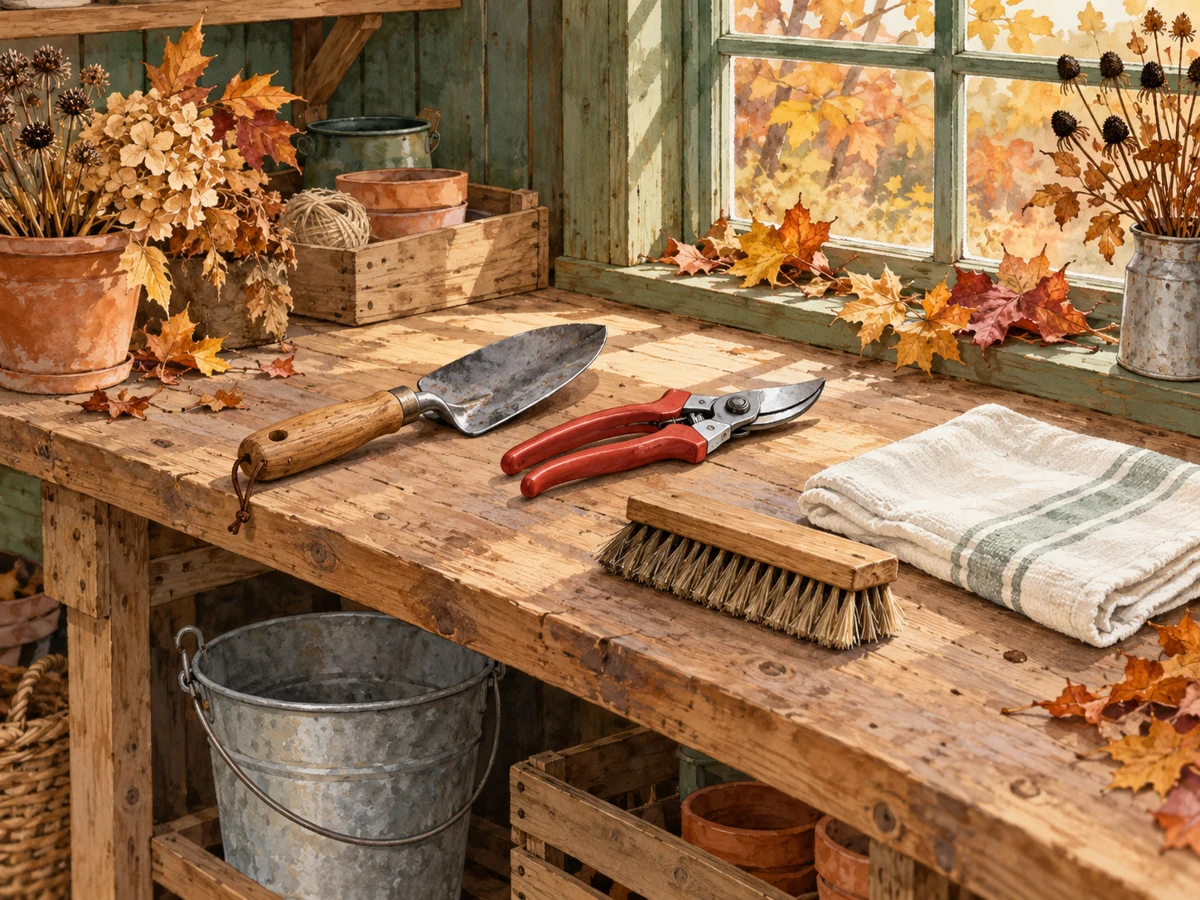
Before buying more tools, give the ones you already use a clear place in next season’s plan. This checklist is for hand tools such as trowels, shovels and pruners. Powered equipment needs its own manual and maintenance routine. Start with one small group—perhaps the tools beside the back door—rather than emptying the entire shed at once.
1. Gather a small cleanup station
Set out a stiff brush, cloths, water, a suitable cleaner and the tool instructions. Choose a stable work surface with room to lay tools down safely. Keep a separate place for anything damaged. Our practical sorting rule is simple: ready to keep, needs repair, or no longer useful. Write the repair job down before the tool disappears into storage.
2. Remove soil and plant debris first
University of Minnesota Extension explains that soil, sap and plant remains can carry plant pathogens, and leftover dirt reduces disinfection effectiveness. Brush off visible debris, then clean with water and soap or detergent where the tool’s instructions allow. Work around joints and other crevices. A tool that looks tidy is not necessarily disinfected; cleaning and disinfecting are separate steps.
3. Choose a suitable disinfection method
Follow current Extension guidance and the disinfectant label, including the required contact time and protective equipment. Check compatibility with the tool material. Minnesota Extension cautions that bleach corrodes metal cutting tools; do not treat it as a universal pruner cleaner. Never mix disinfectants or other chemicals. Where plant disease is suspected, ask local Extension about the specific problem rather than assuming one treatment works for every pathogen.
4. Inspect before sharpening or replacing
Check the handle, fasteners, blade and locking mechanism. Put cracked, loose or unsafe tools aside for repair. Maryland Extension stresses sharp cutting edges and warns against forcing hand pruners through branches that are too large. Follow the manufacturer’s maintenance instructions or use a suitable repair service. A maintenance session is also a chance to ask whether the tool fits your hand and actual task.
5. Finish with dry, protected storage
Utah State Extension recommends seasonal hand-tool maintenance and a light protective oil treatment on metal to help prevent rust. Use a product suitable for the tool and follow its instructions. Allow tools to dry thoroughly before putting them away. Store cutting tools closed or guarded as designed, where children cannot reach them. Give frequently used tools an accessible dry place instead of burying them under seasonal equipment.
A pruning tool to compare only if yours needs replacing
Affiliate disclosure: As an Amazon Associate I earn from qualifying purchases, at no extra cost to you. This is a research-based recommendation, not a hands-on test. Cleaning a serviceable tool may be the better choice than buying another.
FELCO 2 is a bypass pruner that the manufacturer specifies for large right hands. Consider it if routine pruning is part of your garden work and that fit suits you. Smaller hands or left-handed users should compare an appropriate model instead. Confirm the current seller, exact model and options before buying. Price and availability can change.
Compare current FELCO 2 price, photos and options on Amazon
Amazon handles checkout, payment, delivery and returns. For an order problem, use the retailer shown on your confirmation.
Your printable cleanup checklist
Gather hand tools and their instructions.
Remove visible soil and plant debris.
Clean, then disinfect using a compatible method and the required label contact time.
Inspect handles, fasteners, blades and locks; arrange needed repairs.
Dry thoroughly and protect as the tool instructions direct.
Store cutting tools closed or guarded, in a dry place out of children's reach.
Write down each replacement need and its exact job before shopping.
Do I need a new tool-care kit?
Not automatically. Start by checking what you already have and what the manufacturer calls for. Replace a tool because of a real safety or fit problem, rather than because fall arrives. If sharpening or repair is unfamiliar, compare a local service with the cost and fit of a replacement.
Keep the next garden purchase useful
Choose one unresolved job from your cleanup notes. If your pruner is sound, cross that purchase off. If a replacement is needed, use hand fit and the task as the buying criteria. Our small-garden toolkit and pruning-tool comparison can help keep the shopping list focused.
Get the free Practical Picks newsletter
Sources
Clean and disinfect gardening tools — University of Minnesota Extension
Putting the yard and garden to bed — Utah State University Extension