
Fall Leaves: Mulch, Leaf Mold or Compost?
October 8, 2026
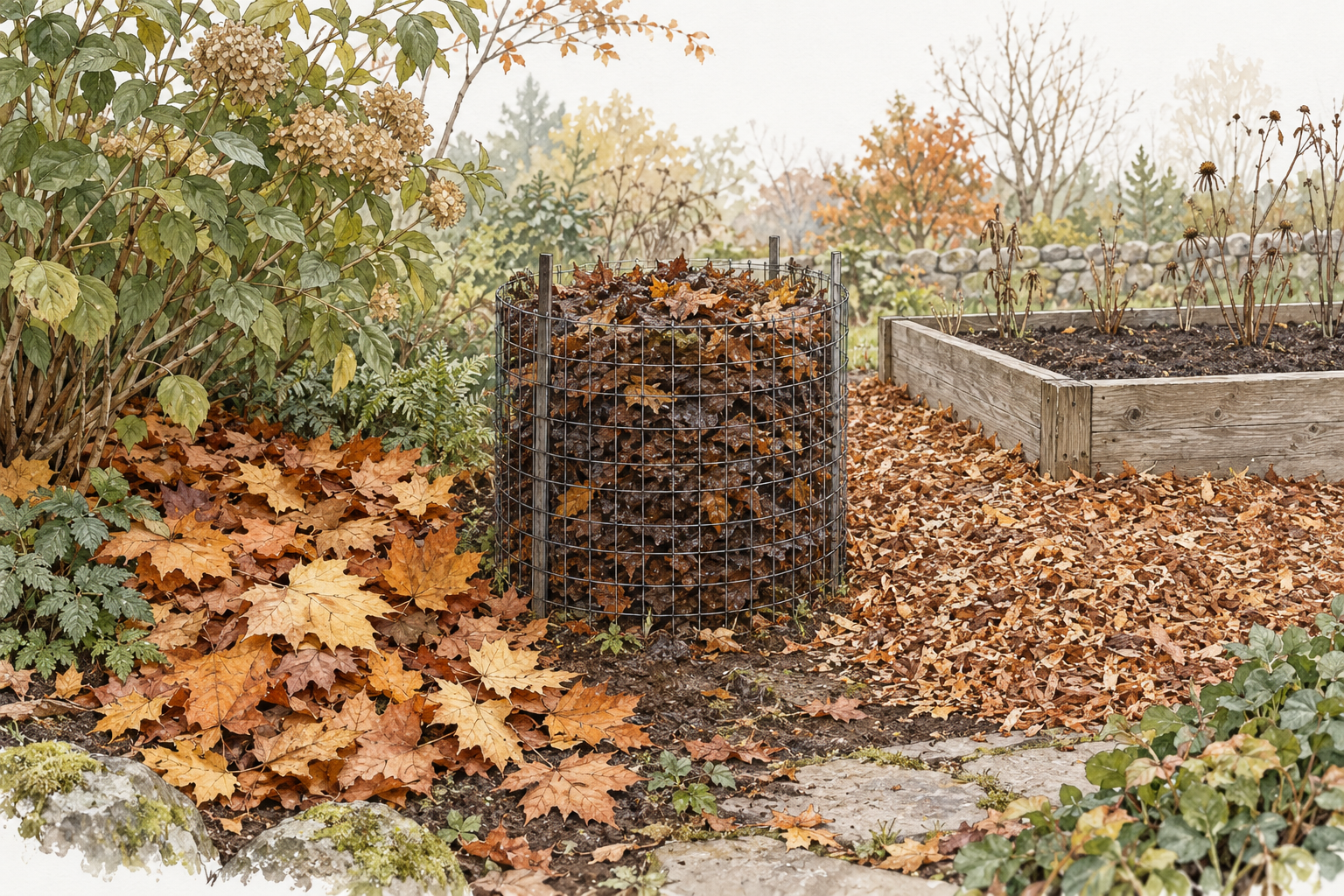
A yard full of leaves presents three different jobs: protect a bed now, store leaves while they slowly break down, or feed a mixed compost pile. Choosing the job first makes cleanup easier and keeps a shopping list from becoming the starting point.
This guide is research-based, not a hands-on product test. As an Amazon Associate, we earn from qualifying purchases. An optional affiliate pick appears below; the leaf projects themselves do not require buying it.
Choose the result you want
For cover this season, use leaf mulch. For a slower soil amendment made mainly from leaves, make leaf mold. For mixed yard and kitchen materials, use a managed compost pile. You can divide the same leaf collection between these jobs rather than committing the whole yard to one method.
1. Keep useful leaves where they already belong
Healthy leaf litter in shrub and perennial borders can provide winter shelter for insects and protect plant roots. Leave some intact instead of shredding everything. Clear walking surfaces and manage heavy lawn coverage separately; a thick blanket can block the grass beneath it.
Sort out diseased or pest-infested plant debris before collecting a leaf batch. A typical home pile is not a dependable sanitation treatment. Follow your local Extension or municipal guidance for disposal of suspect material rather than adding it to a slow leaf pile.
Iowa State’s fall cleanup guidance
2. Use leaf mulch for a job that starts now
Shredded or composted leaves are easier to use as mulch than broad, whole leaves that can mat together or blow away. Aim for a loose cover, not a compressed blanket over plant crowns. Check the bed after rain: if the material forms a dense mat, loosen or redistribute it.
Keep this mulch project separate from the intact habitat area. Work with the leaves collected from paths or other places that needed clearing; there is no need to process every leaf in the garden.
3. Make leaf mold when you have space and patience
Leaf mold is partly decomposed leaf material. A heap or simple enclosure can keep it in one place. Moisten the leaves and allow them to break down; shredding can speed the process. Iowa State describes a roughly three-foot-tall and three-foot-wide pile taking one to two years. Treat that as a planning range, not a deadline: your weather and materials will differ.
Give the project a label with the starting month. Keep a second spot for the next collection so new leaves do not continually bury the batch you hope to use. When it has broken down, use it as a garden mulch rather than calling it a complete fertilizer or a finished container-potting mix.
Iowa State’s leaf reuse and leaf-mold advice
4. Add leaves to compost when you want a mixed pile
Dry leaves supply carbon-rich material. Untreated grass clippings, fruit and vegetable scraps, and coffee grounds can supply nitrogen-rich material. Mix the ingredients, provide air and keep the pile damp rather than waterlogged. Leave meat, dairy, cooking oils and pet waste out of this simple backyard approach.
A leaves-only pile should not be expected to behave like a carefully managed hot compost pile. Passive composting takes patience, and cold weather slows the process. Do not promise spring compost just because the bin is filled in October. If you want a general starting plan, read our existing compost guide rather than buying a larger container first.
Read our simple compost setup guide
University of Maryland’s home-composting guidance
An optional affiliate pick: GEOBIN expandable composter
The existing GEOBIN pick is useful when the practical problem is containing a bulky seasonal leaf collection. Yardfully lists the standard composter as 36 inches tall, with an adjustable diameter of 24–44 inches and capacity of 70–246 gallons. Measure the space you have and confirm the current Amazon variant before ordering.
Fit: an outdoor gardener who wants an adjustable enclosure for leaves and yard material. Tradeoff: this is an open compost enclosure, not a sealed tumbler or a promise of pest-proof food-scrap storage. The container organizes the pile; it does not remove the need for moisture, suitable ingredients and time.
Check the GEOBIN listing at Amazon (affiliate link)
Skip the purchase if a safe existing leaf heap or enclosure already solves the problem. Current price, stock, seller, shipping and returns belong to the merchant listing. Amazon handles checkout, payment, delivery and order support; these products never enter the Rice Ranch cart.
A small leaf plan for this weekend
Choose one area to leave intact. Clear one path or patch of heavily covered lawn. Decide whether that collection becomes loose mulch, a labeled leaf-mold batch or carbon material for an existing compost pile. Write down the destination before shopping. That is a complete first step even if you only have time to move one basket of leaves.